
As reported in the St. Helena Star, transcribed by Mariam Hansen.
William and John Taplin bought the dairying business from their mother and started out on their own.
Grading was completed from Napa to the Dinning property for the San Francisco & Clear Lake narrow-gauge railway and it looked as though the much talked about railroad was to be a reality.
Mrs. George Horton died at the age of 64. She was the mother of Mrs. C.R. Prouty and Mrs.
George Francis of Napa.
Local stores again agreed to close every evening except Saturday at 8:00pm.
In 1883 Napa County had a ratio of marriages to divorces of 194 to 12.
John Greer built a two-story home on his property near Pine Station [Zinfandel Lane].
A citizens meeting was held to discuss the question of re-incorporating the town [It had been incorporated in 1876] under the new law of 1883. Some objected because it would be permitted to increase the tax rate above the existing limit of 15 cents on each $100. On the subject of requiring the additional funds for the construction of a sewer system, it was stated that ‘it had been proved that there was no way to sewer the town because it would be unlawful to empty sewage into Napa River’.
W.T. Gillihan built a fine new home on Scott Avenue.
In February the St. Helena Soda Works was started by E.G. Smith, recently from Lakeport. It was located on the former premises of Samuel G. Clark on lower Pope Street.
Joseph A. Kettlewell and Miss Annie L. Johnson of Calistoga married at the up valley town.
Washington’s Birthday observed
Storefronts were decorated with bunting and flags. The band headed a procession composed of the fire department (30 strong), followed by carriages containing maskers, which paraded through the streets.
Two masquerade balls were held within eight days—one by the band and the other by the German Turner Club.
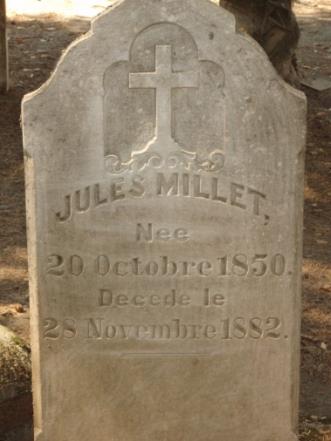
Johan Murbach, the murderer of Jules Millet in Conn Valley a year ago [at the Franco-Swiss Winery], had his death sentence commuted by Governor Stoneman to life imprisonment.
Mrs. Anna Dixon died who had been seriously ill for some time, but who had appeared to be making a good recovery, suffered a turn for the worse and died at her Spring Street home on March 1. She was survived by six children.
1884 marriages
- Thomas McQuie and Mrs. Millie Toland (owner of the Toland House on Howell
Mountain) were married in Napa.
- Dr. William Root, who last week returned to St. Helena with his bride, was tendered a
reception by fellow members of the hose company and serenaded by the band.
- On October 3 Thomas B. Money and Miss Lillian Richie were married at the home of the
bride’s parents near Oakville.
A town ordinance was passed authorizing formation of a hook and ladder company. A meeting of young men was held and a company organized on March 14.
Fury at a Vallejo tax man
A prominent local wine grower was returning one day from San Francisco, with a Chinese servant of the same train. While a stop was made in Vallejo the tax collector entered the car and demanded two dollars from the Chinese, who protested paying at that place because he was going to live in St. Helena. His baggage was seized and held until his employer paid the tax .
The event caused quite a stir and the collectors subsequently were restrained from being so zealous.
A funeral and a runaway horse
The funeral of a bigshot Chinese worker was a picturesque event. First came a wagon with a Chinese band, two or three cymbals, a horn and a drum “upon which the heathen musicians kept up an infernal din” to quote the newspaper. Next came the hearse, followed by sixty or more men on foot in double file followed by a wagon with lighted candles and punk [incense]. It was loaded with meat and other foods to be deposited at the grave for the departed spirit to eat. Along the streets in the line of procession there were scattered hundreds of small slips of paper, punched three or four times. It was believed that the devil would have to pass through all of these holes before he could catch up with the deceased. It was said that the evening of a Chinese funeral a feast was enjoyed at the cemetery by the hoboes.
Charles Jessen opened a cigar factory in the building next to the Swiss Union Hotel.
Charles Vann purchased the interest of Fred Sterling’s partner in the plumbing and tin shop.
On April 17 it was reported that the road between St. Helena and Calistoga was impassable owing to the heavy rains.
The Baptists installed a baptistery in their church. It was nine by four feet in size and four feet deep and lined with zinc. When the lid was closed it formed a platform behind the pulpit. The purpose was to hold immersions here instead of in the Napa River, as formerly.
The town election resulted in the choice of George C. Fountain, George A. Riggins [the druggist], William E. York, David Cole, and George B. Worrell as trustees; C.N. Hale, treasurer; R.L. Spurr, marshal. All were unopposed. The trustees appointed Emmanuel Galewsky town clerk. The new town charter was defeated 145 to 126.
As prize winners at a local dance, a brother and sister made a sweep of the awards in one classification—the best looking lady and gentleman. The winners were Miss Annie Cunningham and her brother Ed.
On April 26th the Odd Fellows observed the anniversary of their founding with a picnic in Hunt’s Grove.
Upon arrival of the morning train a parade was formed. It proceeded to the corner of Main and Adams, then countermarched to the Grove. George A. Knight was the orator, while a slight sprinkling of rain fell. At the end of his speech the band played one or two numbers and the dancing began on the open floor set up for the occasion. Then the rain came down in torrents accompanied by a howling wind and a rush was made for the carriages. Many who had walked to the Grove attired in light clothing were drenched. The Odd Fellows moved the event to the hall at the corner of Main and Spring Streets, but the crowd was so large that the dancing stopped.
The county board of supervisors repealed the squirrel scalp bounty, which was becoming too costly. One man slaughtered 5,943 squirrels in eleven days. At five cents a scalp, this brought him a neat return of $297.15.
After considerable agitation around town for a public hall or auditorium or theater building, the St. Helena Turnverein German Club purchased a lot from Joseph Gaggetta and William Fealy in August with the intention of erecting a hall thereon.
Five growers produced hops this year: Philip Elting (14 acres), Simpson & Cole (28 acres), Storey Brothers (45 acres), James Dowdell (27 acres), and R.F. Lane (14 acres). Three hundred and thirty five pickers, all Chinese, were employed in the various fields.
A public Hall, called Badlam’s Opera House, was built in Calistoga by a son of former assessor Badlam of San Francisco. It was filled with stage, scenery, dressing rooms and could hold 500 people.
Albert Schroepfer, a San Francisco architect, who purchased land south of John Tychson’s place [on Hwy 29 near Lodi Lane] in 1882, built an eleven-room residence on an elevated situation commanding a wide view of the valley.
The members of the band provided themselves with small oil lamps to wear on their caps to illuminate their music on night marches.
Henry Jelinsky, a young man formerly in the employ of J.R. Kettlewell & Sons, started a blacksmith shop on his own on lower Main Street near the Pope Valley Road, where he stayed many years.
The Republican County Convention was held in St. Helena.
The summer of 1884 was an unusually cool one. As late as August there were complaints of the continued cool and foggy days. A heavy rain fell in early September, there having been rain every month of the year so far.
Miss Kate Ragan of San Francisco opened the Bon Ton Millinery store in the building between Steves Hardware and Logan Undertaking Parlor.
Charles M. Logan and R.F. Rammers were publishing a small paper called “Name it and Take It’.
Later it was changed to “The Moon”, perhaps to outshine the Star. It was 11 x 14 inches in size, four pages.
Joseph Gaggetta completed a residence on his vineyard property north of the railroad depot [The depot was at Railroad and Hunt in 1884. The new depot at Railroad and Pine was built around 1888. Gaggetta’s home was later the Jackse home, still on Library Lane].
Tramps along the Napa River
They created a great nuisance. They raided the farmers’ gardens, started fires that destroyed considerable property and annoyed the housewives. Finally a citizens’ committee was organized and placed notices throughout the vicinity notifying the tramps to leave. Then more than 100 citizens, headed by Constable McGee proceeded up and down both banks of river and ordered the tramps to leave within thirty minutes. This showing of force had a convincing effect. The men shouldered their blankets and departed. The next morning not one was found along the river.
The Democrats held their county convention in St. Helena.
Theron H. Ink built a large two story residence three miles below town [the Ink House is still at Hwy 29 & Whitehall Lane]. It is surmounted by a large observatory.
James A. Maguire killed a rattlesnake with 21 rattles while hunting near Windwhistle. Dave McLennan shot one with 22 rattles while hunting in the hills west of Oakville.
The famous Robert G. Ingersoll [a nationally famous orator and agnostic] delivered a lecture in Napa. His eloquence and brilliant wit held the audience spellbound for two hours.
The St. Helena Library Association was formed with a capital stock of $1,000. A room at St.
Helena Academy was rented for a library and reading room. Books were purchased and local newspapers were donated.
Carl Browne, an artist, arrived in St. Helena to sketch persons and places for the San Francisco Argus newspaper.
George Kennedy, the carpenter, built a shop for his own use on Main Street near T.H. Ink’s stable [near Sunshine Foods, 1115 Main Street].
J.H. McCord harvested an average of 15 tons of grapes per acre on a 12 acre patch of vineyard.
The Napa County Teachers Institute was held at the schoolhouse in St. Helena. Miss Stella Ames kept the minutes.
In view of the many near accidents to pedestrians, the town trustees passed an ordinance prohibiting riding or driving through Telegraph Alley [south of Hotel St. Helena]. A sign was placed at each end warning that a fine of ten dollars was the penalty.
A new Methodist parsonage
Church lot. The old parsonage was moved to Allyn Avenue [the new parsonage was moved to Spring west of Hudson in 1976].
The death of Joseph Gaggetta
While engaged in hauling grapes and having arrived at the cellar, Gaggetta suddenly fell backwards from the seat of his wagon load of grapes and expired. He left a widow and two children.
L.A. Bly of Santa Rosa purchased the St. Helena Bazaar from George H. Beach.
Fall 1884 election results
The fall election resulted in the choice of Henri A. Pellet for state assembly; R. Crouch, superior judge; N.L. Nielsen, county judge; Charles Arnold, county treasurer; G.W. Lawrence, coroner;
O.H. Buckman, surveyor—all Republicans. The Democrats elected Henry Harris as sheriff; Henry Hogan, district attorney and W.E. DeWeese as tax collector. Township officers elected were William Elgin as justice of the peace and James Allison as constable.
Fritz Beringer and family came from New York to occupy their recently built residence [the Rhine House] and to make St. Helena their future home.
William & Martha Kibbler purchased the Grosbeck property on Main Street above the Warren lot [location of the Wydown Hotel today] in November.
The Kettlewell shop comes down
An old landmark disappeared with the removal of one of the oldest buildings in town from the south corner of Main and Adams Streets, the Kettlewell & Sons Blacksmith Shop. On the site the firm put up a two story brick building with solid walls two feet thick. The hardware business was moved to the lower floor, while the upstairs was the largest hall in town. The adjoining store, formerly occupied by the hardware store, was to be used for storage of vehicles.
Two young men were fined in the justice court for fast driving. The speed limit at the time was eight miles an hour.
Sheriff Bennett James died at his home in Napa one month before the end of his term in office.
A December north wind
A windmill was blown over and the skating rink was wrecked, the large tent cover collapsing and being torn to shreds. Tent poles were broken into heaps and destroyed. The case containing the roller skates overturned.
After a wet summer, the winter started out dry and several fires raged in the hills near town.
The yield of hops for the year was 1,158 bales, or 112 tons produced by five growers.