
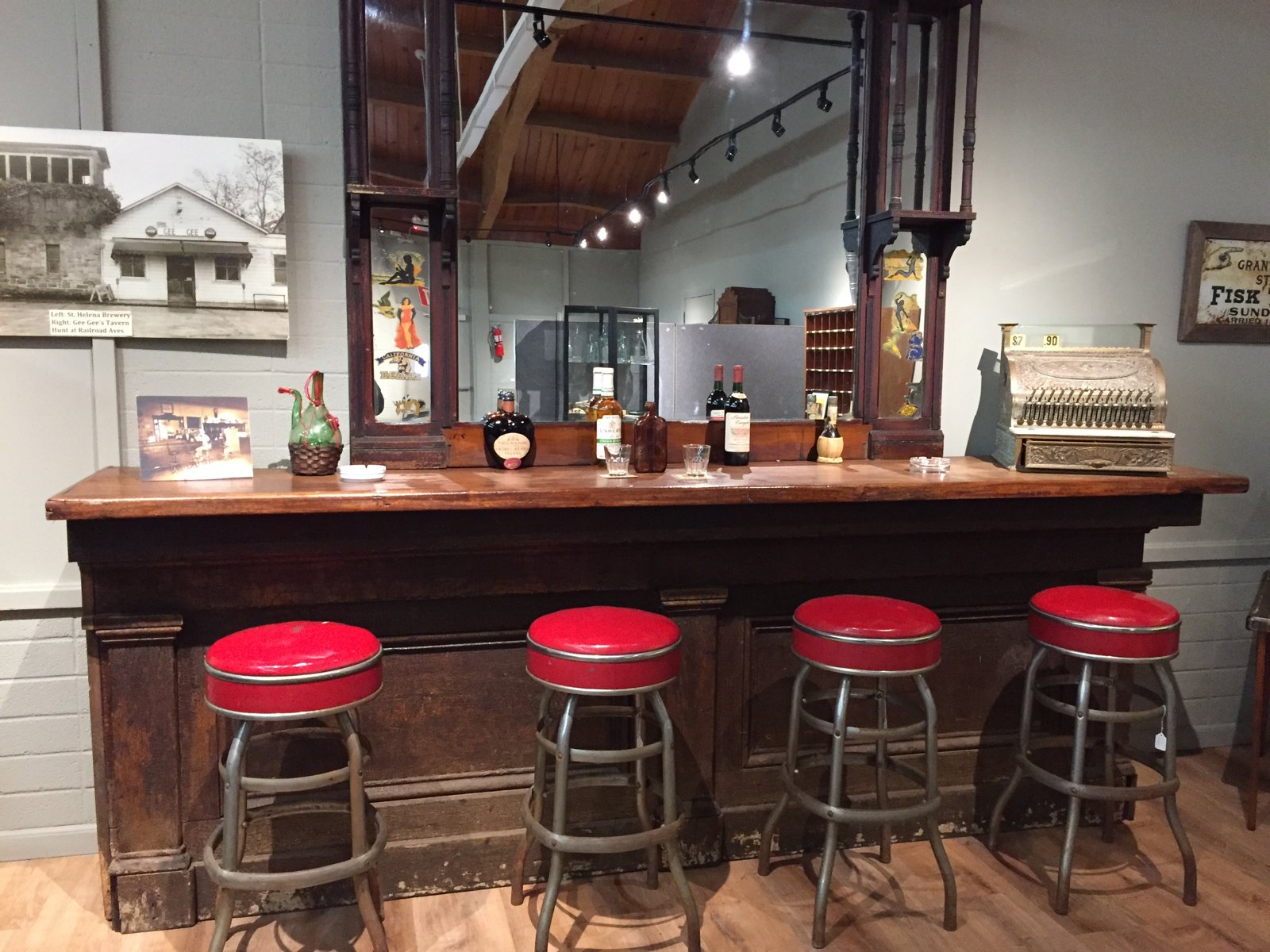
The back bar and red-topped stools from Gee Gee’s are on display at the Heritage Center.
In 1934 Felix “Gee Gee” Freilone and his wife, Frances, opened a Saloon under the name Gee Gee’s Bar, serving beer, wine and home-cooked food, and it became a local hangout for more than 30 years. The bar and its shiny red bar stools and mirror proudly anchor the back wall of the Heritage Center.
Ethnic restaurants reflected the cuisines of their immigrant owners
Restaurants in St. Helena put a high premium on customer service and were known to offer dishes cooked to order at all hours of the day. Danish immigrant John Nielsen’s restaurant had a large banquet room for business and community dinners. Greek immigrant George Kelperis’ restaurant was a popular gathering place for locals.
Bakeries showcased a rich variety of ethnic delicacies
Immigrants from Eastern Europe, Germany, France, and Italy opened bakeries—all recognized for their pastries, rich desserts and breads. Demand transcended ethnic roots—It wasn’t hard to fall in love with French croissants, eclairs and macaroons, and Italian panettone and cannoli. Immigrants also shared the spicy sausages and cheeses that were indigenous to their homelands. Several food stands in St. Helena offered homemade tamales and enchiladas, reflecting the owners’ Mexican heritage. By the late 1890s, restaurants were taking advantage of the St. Helena Star to advertise their specials.
A new Valley cuisine was emerging
The arrival of multiple cultures in Napa Valley is a study in the emergence of a multicultural cuisine. Early cookbooks, restaurant menus, and recipes tell the story of how foods like tamales, oysters, croissants and chop suey crossed ethnic boundaries and became popular across the broader Napa Valley population. Variations of recipes are a commentary on how different cultures modified recipes to suit their palates.
By the 1900s, St. Helena began to gain recognition for its fine dining, influenced by its agricultural bounty.
Read more: Brewing Beer in St. Helena