
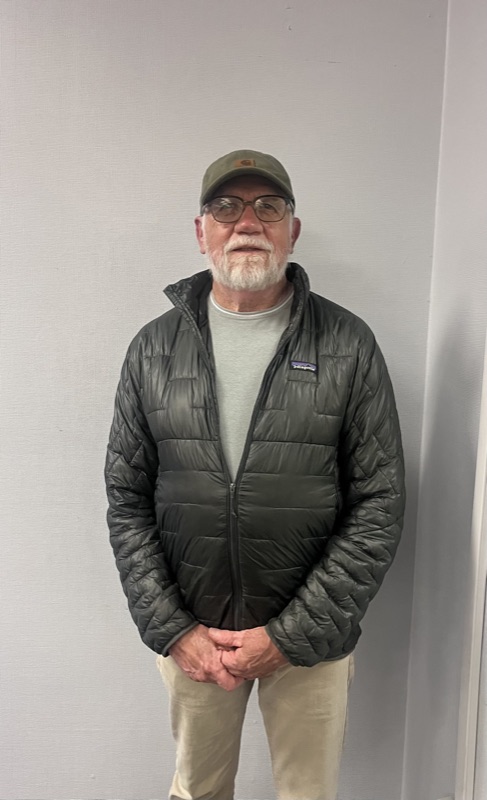
Luis Peña
Voices of St. HelenaJuliana Carroll: This is Juliana Carroll and Danette Olguin Reyes, and I am pleased to welcome Luis Peña, who we are interviewing on behalf of the St. Helena Historical Society’s Oral History Program. We are conducting this interview at 3:22 o’clock on April 20, 2026, at St. Helena High School. Welcome, Luis. Can you please begin by telling us about when and where you were born?
Luis Peña: I was born in Michoacán, Mexico, in 1953.
JC: And then, could you talk a little bit about what it was like growing up in Mexico?
LP: Well, in those days, it was very nice, because I grew up in a small village, and everybody knew everybody. And [there was] only maybe a population of 2,000, and it was very nice, because, you know all the people, [and] in the school you knew everybody, everybody’s friends. [It was] a very nice place to grow up.
JC: What were some of your earliest childhood memories?
LP: My memory of the time is, in those days, my father had a bunch of horses and cows, and we just enjoyed riding the horses. And after that, starting when I was maybe like nine years old, ten years old, was when we started getting bicycles everywhere. And another memory that I remember is when I was like fourteen, I got a motorcycle, [slight chuckle from both the interviewer and interviewee], and it was so fun in those days.
JC: Could you tell us a bit about what you remember of your childhood home and town?
LP: Well, the name of the town was Atacheo, and it was in Michoacán. And what else did you say?
JC: What did your home look like? Like, who were you living with?
LP: Well, I [was] living with my mom, because my dad, he was here in the USA; and also, I lived with three brothers and one sister. The rest of the family was always here in the United States.
JC: They were always here in the USA?
LP: Yeah, and I lived there until maybe sixteen years old; that was when I came to California.
JC: What do you remember about going to school in Mexico, because you went to school in Mexico until you came here?
LP: Yeah. Because my village was very small, we just had a [school which went] until 6th grade. We went to school until 6th grade. Then I would need to go to another city, maybe eight miles away. And we called it Secondaria, from 7th to 9th grade.
JC: So, like middle school here [in the United States]?
LP: Yeah, like middle school.
JC: Did you have a favorite subject in school?
LP: Well, I had sports. [laughs] No, I liked math, and history. Geography, I also liked. Yeah.
JC: And then, what sports did you play?
LP: Oh, we played soccer most of the time. But also, the school played volleyball and basketball. Yeah. But soccer was like the main thing. The other ones were just in the school. Soccer was outside of the school every day.
JC: And then, did you have any coaches or people at that age who really inspired you?
LP: Not really, not really. We just played for fun, and we didn’t have a coach or nothing. We just made teams. Sometimes we just flipped the coins and [would] see, “Okay, you and me, we can play.” But no, no coaches, no nothing. [Flipping a coin was how they decided who would start in a game]
JC: Just very casual.
LP: At the school, it was just the teachers, like PE teachers for basketball or volleyball. But nothing to inspire me, no.
JC: Did you have any big dreams or goals when you were a kid?
LP: Do you know what, not really, because all my family was [here]; my dad was here, my big brothers were here. I think I never had a goal to finish school, because I knew I was going to come to the USA. I mean, that was my priority, mostly because I saw my brothers. When they would go, they had nice cars, nice clothes, and money. And I would say, “Oh, I need to go there.” [laughs]
JC: So, then how did your family view the opportunity for your dad and for you and your brothers, [the opportunity of] coming to the US?
LP: How they had the opportunity?
JC: Yeah, like, how did they view that opportunity? Was everybody sort of excited for you guys?
LP: Well, they asked if I wanted to come or continue in school. And I said, “No, I want to go to the USA.” They gave me the chance to decide.
JC: And so your dad, in the questionnaire, you mentioned that he went to the US about twenty years before you went over. Was that correct?
LP: He started coming before I was born.
JC: Oh, okay.
LP: Yeah, because [he] came in the Bracero Program.
JC: Yeah.
LP: Yeah, but this is like in the 1950s, something like that.
JC: So he wasn’t home with you guys; he was always in the US?
LP: When I was born, he was here [in the United States]. I met my Dad when I was probably three years old.
JC: Oh, wow.
LP: Because he was there when I was born. Then he came back when I was about three years old, and that’s when I met him. Yeah. I mean, when I was born, I just had my mom. And also my sister, the oldest, she was married, and I called my brother-in-law Dad. [interviewee and interviewer both laugh] Because I have a nephew. This is my nephew. This is Agustín. [interviewee points to the figure on the far left of image # 1 holding the poster that reads “We want a fair contract”] His father, he was the one that they would call “Dad”, and I’m saying, “Oh, maybe, maybe he’s Dad.” [interviewer and interviewee both laugh] I saw him every day at my house, and I started calling him Dad.
JC: Did you spend a lot of time with cousins?
LP: In Mexico? Not really with cousins, more my friends that lived in my neighborhood. No.
JC: And when you first moved to St. Helena, what year was that, and how old were you?
LP: I was sixteen years old, almost seventeen, but sixteen. And first of all, I went to Merced, because my sister lived there, and I was sixteen years old by then. And on that note, this is in 1970. But in November of 1970, I came to St. Helena to start working in Christian Brothers [a Catholic educational institute that became winemakers to fund their educational missions. They owned a winery, Greystone Cellars, and a labor camp where farm workers stayed, and that is what Luis is referring to here] with my brothers and my dad, who worked for that company. But I needed to go to the high school in Calistoga to get a permit because I was too young to work. They had me sign a permit to work and not go to school. It was pretty bad. [interviewer and interviewee laugh softly]… [indiscernible].
JC: So you attended school in Calistogia, and then that’s where you got your work permit to start working?
LP: No, I never went to school [in Calistoga]. The guy from the office with the Christian Brothers, he came and took me to the school, and they just gave me the permit, but I didn’t spend one day in the school. But I said my mistake [was that], maybe I needed to go to the school. But I couldn’t because my father and my brothers lived in the labor camp, the Christian Brothers’ labor camp. And well, to live there [at the labor camp], I needed to work. I didn’t have a chance to go to school because I wouldn’t have had anybody to live with.
JC: What did that transition look like, going from Mexico to working here in the US? Was it a difficult transition?
LP: It was a difficult transition because in Mexico, I would not really work; I would be in school all of the time. And work for me, it was totally, totally different, because I had never worked before. When I was maybe, like, eight years old, sometimes I helped my dad because he was farming sorghum, or corn, or garbanzo beans. And I helped, but nothing compared to working a full day here [in the United States]. But I had the idea. I liked to be outside. At first, I would say, “What am I doing? Maybe I [should’ve] stayed at the school.” [laughs] But after that, it was kind of normal; I just started working, and I worked for fifty-one years.
JC: So, what did your day-to-day life look like when you were working with the Christian Brothers’ labor camp? From when you woke up to when you went to sleep?
LP: Well, because we lived in the camp, we started work at like 7:00 in the morning. I mean, we [would] wake up maybe, like, 6:00 in the morning. Because we had a union, right? The farmers’ union.
JC: The union, yeah.
LP: Yeah, I think they started the union there like two or three years before I came, like in ‘68 maybe. I mean, [when] we lived there, we got everything. We got somebody [to] cook, somebody [to] do it. I mean, we would just wake up, take a shower, go to the kitchen, get our breakfast, and go to work. And then, [at] like noon, they [would] bring the lunch to us, to the field. And we would work normally, like nine hours a day. When I started, was when they were starting the pruning, like in November. That was my first job, pruning.
JC: So, what were you helping to harvest or farm when you first moved, and how did that change? Did it change at all?
LP: Oh, like the farms? To farm?
JC: Yeah, were you always farming grapes, or were you farming something different before?
LP: Just grapes. [interviewer laughs] Because I just went straight to that company, because my father and my family worked there. And yes, because when we started, they would go by seniority; it would depend on when you started. And when [it was] the low season, they would lay off some people. [And] because I was a new one, I started getting laid off, like, maybe twice a year. And then I [would] go to Merced, to continue working, still in the field, but picking peaches, or apricots, tomatoes, or sometimes in late fall, [we were] picking pears. But it was just for a couple weeks at a time or maybe a month. But, normally, it was just grapes.
JC: And then, can you describe your experience with the Christian Brothers’ labor camp and talk a bit about who they were?
LP: Well, the experience was very nice, because we had the facilities [which were] really nice. We had one room for two people; two beds, and a closet, and also a bunch of showers. And somebody [would] take care of cleaning. We didn’t need to. Well, just clean your bed and your room, [laughs lightly] but outside, everything, the showers and everything, is somebody working in that area. Like in the kitchen, all the meals were just right there. And also, we had a place with a pool table, [and a] TV. There were a lot of things to just enjoy. Yeah. I mean, it was not too bad an experience; it was good. [interviewee and interviewer both laugh]
JC: During the time you were working in the [Napa] Valley, was around the same time that the Bracero Program ended, and the United Farm Workers of America was founded. And you talked a little bit about the unions. Were you involved in the [unions]?
LP: Yeah, I would be involved in the unions. Like I remember the committee and when we would need to try to renegotiate contracts with a company. And I would be in a few negotiations with César Chávez and Dolores Huerta. They would come together, and we [would] go with them. And then, most of the time, we [would] do them [the negotiations] in the hotels in Napa, to do the negotiation. And they [would] take like weeks. I mean, I [would] see those guys a lot. Yeah.
JC: When did you first start getting involved with the unions?
LP: I started getting involved when I was probably nineteen years old, nineteen, twenty years old.
JC: And then you talked about the contracts that you guys were looking to get signed…
LP: Yeah, we [would] have meetings with the farmworkers, asking what they want, for like increased wages. Sometimes people they wanted to increase like ¢50 an hour or more. Or to make better conditions in the kitchen or in some other areas. Because, before they started the unions, working in the vineyards was really hard because you wouldn’t even have water. You needed to take your own water. And some people just took a bottle. A bottle of water for a whole day. I mean, in the summer, the water is like soup; it’s really, really hot, because we didn’t have an ice chest or nothing. And also, no bathrooms in the vineyards. And when they started the union was when Chávez started pushing to have all these services for the farm workers. And also we never shared in the benefits of the medical plan, or vacations, or, yeah, all kinds [of things]. This is what the negotiations were about. And sometimes, like I said, they [would] take days because we [would] give the profits to them, and then sometimes they wouldn’t accept, and they need another one, you know, back and forth, back and forth, talking. But for me, I think the unions, they were one of the best things for farmworkers. Because I saw how they worked, people that were not in the union. But in this valley, because a lot of companies, they didn’t want the unions, they just started increasing the benefits for the farm workers. Sometimes even better than us, because they tried to sell the [idea to] people: “Don’t push to the union, you have this. If you start pushing for the union, you are going to lose all this.” And that’s why sometimes people, they don’t want to decide to be in the union or vote for the union.
JC: Was there a protest that you remember most, or what were some of the protests that you guys did?
LP: Some of the protests are like this, [gestures to image #1] when they have a lot of problems, like [in] Coachella, or all this central California, when they have a problem getting a contract, we would start boycotting. Sometimes at wineries or their products, or their wine, or their grapes; table grapes were a big deal in those days. They were boycotting because one of the biggest growers in Central California, they grew table grapes, and they didn’t want to sign the contract. And we helped those people do boycotting here, like in Napa, or Santa Rosa, or here in Calistoga. And right here, [referencing image #1 again] this was at Christian Brothers [Winery, Greystone Cellars] because they didn’t accept the contract we tried to push. And this is in front of the, you know, where the CIA [Culinary Institute of America] is?
JC: Oh, yes.
LP: Yeah, that was Christian Brothers; that building was for the Christian Brothers.
JC: Oh, wow.
LP: And we are outside of it. And also, just giving flyers to the people outside of Safeway or Sunshine. Giving flyers to support the union.
JC: And then, in this one, [referring to image #2] you’re protesting with your kids?
LP: Yeah, we are boycotting. Yeah, we did a boycott. Yeah, maybe this is in Napa, or here in St. Helena. I forgot where it was, but that’s where we [would] do it. Yeah, this is Jon [his son, the little boy he is holding in the photo] and Nadia [his daughter, the little girl holding his hand in the photo]. Yeah, this was when we would do it on the weekends. When we weren’t working, we went to help do the boycotts. Yeah.
JC: So then, when did you first meet your wife, and how did you meet her?
LP: Wow. [interviewee and interviewer laugh] I met my wife when I was very young. Her mother was a friend of my sister, my older sister. And one day in Merced, somebody was going to get married. And it was a friend from my wife’s family. And also, they asked her to be in the wedding, but she didn’t have a guy to be with her. And that’s when my sister said, “Well, maybe Luis can be with Maria,” and that was it. After that, we started talking, but she lived in Merced, and I lived here. I went maybe every two weeks to Merced, every three weeks. And we were dating for like four years.
JC: That’s a long time.
LP: She was very young. We got married when she finished high school. That was really young. [interviewee and interviewer both laugh] Because she was seventeen, we couldn’t marry here. But one of my nieces, they were going to have a quinceañera [a customary coming of age celebration for when a girl turns fifteen years old] down in Mexico. And they wanted my wife to go with them to the party in Mexico. And for a month, they didn’t let her because I’m the boyfriend. And we decided to marry in Mexico. [interviewer and interviewee laugh] I mean, she went to the quinceañera, and we married there. But [we were] not living together, just married for the law, not in the church. And when we came back, she just went back to her house, and I came back to work, and we were just married until that year, but in November. And she was eighteen already, and I would’ve been like twenty-two when married. And after we married with the church, that was when I brought her to Calistoga. You know, we didn’t live together until [we] married with the church.
JC: And what year did you guys get married with the church?
LP: Oh, the same, 1975. We married in April in Mexico, just with the law, and then with the church, [it was] the same year, but in November. And then [we would] go to Mexico for the honeymoon. [interviewee and interviewer laugh]
JC: So then, in the questionnaire, you talked about how you eventually started working for the [Napa Valley] Ag Supply company as a trucker; what year did that transition happen?
LP: The union had a lot of problems with this company, the Christian Brothers, because the Christian Brothers went out of business. They didn’t want to be in the wine business anymore. And some labor contractors took over the company. But I guess they wanted a lot of changes; they didn’t want the union. And it was a very big hassle, and I was kind of tired, and [so] I started looking for another job. I was still working there, but just looking outside, [for another job]. And my first priority was to start working in a winery. I said, “Well, why not? We’re going to stay in a winery.” And I applied for maybe two or three. And they [Napa Valley Ag Supply] called me, but they offered me just to work the harvest, and I said, “No, I can’t. I got a full-time job; way better.” In those days, it wasn’t Christian Brothers; they changed the name and everything, it was another company. And, and I said, “No, I can not accept.” And I just started looking, and one day those guys, they just called me. The guys who worked for them. But the company, the name was Napa Valley Ag Supply. Right now, it’s Wilbur Ellis because they sold to Wilbur Ellis, but in those days, it was Napa Valley Ag Supply. It was just two owners here, for St. Helena. And they knew me because when I started truck driving, I started at Christian Brothers. I was maybe twenty years [old] when I got my license for truck driving. I [would] move equipment. And also, I got a license for driving the bus. Because with the union, [they would] provide transportation for the farmworkers, and I drove the bus. [I would] take them to the vineyard, to the field, [and] in the afternoon, [to] go back to the labor camp. And sometimes the company, they [would] just send me to pick up fertilizer or chemicals, and that’s when I met those guys who owned the Napa Valley Ag Supply. And I don’t know who told them that I was looking for another job, but one day they just called me and they said, “I’m going to talk to you.” And they offered me a job. But they offered me only a part-time job, because they had another guy to work from 1:00 to 5:00, and they needed somebody to work from 8:00 to noon. And I said, “Well, that’s okay, thank you. I appreciate that, but I can’t.” [They asked,] “Why?” I said, “No, because I’ve got a full-time [job]. I’ve got benefits. I’ve got a medical plan, I’ve got vacations. I’ve got everything there, and I don’t want to leave there just to work four hours a day.” And they said, “Oh, okay, but if you get laid off for like a couple weeks. Do you want to come and try it?” I said, “Oh, maybe… maybe.” And one day, because normally in July, all the work just goes down because there’s nothing else to do in the vineyards. You’ve finished the spray; you just wait for harvest. And they laid off everybody for, they say, like two weeks. And this is in 1994. And I remember the date they told me this, it was after the 4th of July. After the 5th of July, I just came and talked to them. And I said, “Well, I got laid off.” [They said] “Okay, then you want to try it?” I said, “Sure, I can try it.” And this was at maybe around 10:00 in the morning, because I didn’t want to be too early, because I just went to ask them. And they said, “Well, you’re going to do this, and this, and this, here.” And I said, “Okay, see you tomorrow.” [Then they asked] “Why? You’re here. Just stay.” [interviewer and interviewee laugh softly] I said, “Okay, if you say so.” And that’s how I started. And then they went, after a week from when I started, they went on a vacation boat. And he said, “Okay, you’re going to stay here by yourself. And just one of the owners, his wife, is going to do the computer.” And I said, “Okay.” And then it started raining really hard that year, like in July, really hard. It was very weird, but the company just called everybody. “No, you need to come back to work because we need to spray.” Because all the grapes, they were going to un-sprout or something. And I told my boss, in that company, and I said, “You know what? I don’t know what to do. Because I’m here, these guys went on vacation, and I don’t know. I don’t want to close the door and leave, because they gave me the chance.” And he said, “Okay, when they come back, you just come and tell them that you recall.” And when they came, I told them, “You know what? This happened, and we are pretty busy here, and I don’t live here. I need to go back because I need to start working.” And he said, “Well, you don’t like it over here?” I say, “Yeah, I like [it].” [And he asked] “Why do you leave?” I said, “Well, I’m leaving because this is part-time.” And by then, I didn’t even know how much they were going to pay me because I never asked for money. And he said, “Well, if we offer you full-time, will you stay?” I said, “Well, it depends.” I said, “If you are going to offer me full-time, now we’re going to talk about money.” Because I didn’t even know if I [was going to] work for free or what, because nobody [had] offered me nothing and I never asked. Yeah, they gave me the offer, and I liked the offer, because it was very generous compared with what I made in the vineyard. And I said, “Okay. I [will] stay here.” I called my boss and said, “Sorry, but… see you, I’m going to stay here.” Yeah. That’s how I started in that kind of company.
JC: What were some of the connections that you made at that company? Did you make any good connections or have anybody you looked up to?
LP: Well, I met most of the people, most of the growers, because I did a lot of deliveries to them, and you just make a lot of friends. But connections for changing my job, I’ve never been interested. Sometimes they offered me: “Go back to the vineyards, and you can be a supervisor.” But I would never be interested. I just met a bunch of people.
JC: In the questionnaire, you mentioned Dennis Hansen, who owned the Napa Valley Ag Supply company, where you were working. You talked about how he made a significant impact in your life. How did you get to know him?
LP: Well, this is the guy who called me for work. And also, he was very honest, and that’s what I liked. And very generous. I am just going to tell you this one thing: because I started in July, working. In August, I think I had been [there for] just one month, working there. And he [Dennis Hansen] said, “Well, your kids are still on vacation. They are going back to school soon. What are you going to do?” I said, “Nothing.” [He asked] “You’re not going to take them for a vacation?” I said, “No.” And that afternoon, he just called me. He said, “Wait, I want to talk to you.” And he gave me $500, a check. And he said, “Take a week. Take your kids for some treat, and everything is paid.” And I said, “Wow, I’ve just been here for one month.” And you never see those kinds of people. And that’s why I say he is very nice and honest. And always, I tried to do my best, and I think I connected with him, because we are still friends, we are still talking. And that’s why. And also Herb Lamb is the other, [they were] the two partners; Herb Lamb, and then Hansen. And all the time, he treated me like family. We went to have lunch every day, to Meadowood, or whatever; just nice places, and they paid everything. I never asked for vacations, but I never needed to, because they [would] just give me vacations, give me money. If I needed to go to Mexico, he paid me all the time that I stayed. They wouldn’t say, like, “I’m going to give you two weeks.” No, just until I came back, they still paid me. I mean, it was incredible. Yeah.
JC: And then you talked a little bit about how Wilbur Ellis eventually took it [Napa Valley Ag Supply company] over. How did your responsibilities change from before Wilbur Ellis took it over and then afterward?
LP: Well, when I was starting, the Napa Ag Supply was here by La Fata [Street]. I got the job there. But they built a new facility, a bigger one. And after we moved, Wilbur Ellis started trying to push to buy all the businesses. Until I think they can’t say no because [it was] like money, money, money, until they sell. By then, there were like three workers. When I started, it was just the two owners and I, but when it moved to the other place, there were four employees and two owners. And that was when they just said, “Well, I’d like to talk to you guys after work.” And he told us they were going to sell to Wilbur Ellis. And he said, “Well, we have a plan to sell, but not that soon, maybe like in five, ten years. But they gave the offer, and we can’t say no.” But they put in the contract that we were going to keep working for Wilbur Ellis, with more benefits. Because they offered us two pension plans, and also 401(k), and more holidays. And also increased wages. But that was because Dennis put it in the negotiation. That was one of the things that he needed to be sure [of] before he signed it himself. And then that’s when I started with Wilbur Ellis.
JC: And what were you in charge of, or what was your role when you started at Wilbur Ellis? Were you still doing trucking, or had it changed?
LP: No, it was still the same. Still the same. Before, when it was Napa Valley Ag Supply, I was not just driving. I was also in charge of sales. Yeah. But when it was Wilbur Ellis, they hired more people to be in charge of the computer for sales. And that means I would just be a driver. Yeah. But because they hired another, maybe four or five more employees, it started growing, growing, growing… and we got more customers. Yeah, because it was a pretty big company.
JC: So you talked about how you met Maria, your wife? What was it like raising a family in the Valley?
LP: Raising [one] here?
JC: Yeah.
LP: After we married, I don’t know how to say it, but cuando nos cayó veinte, when we realized what we did, we said, “Wow, I think we are too young. We didn’t do the right thing.” And my wife and I started talking on the side: “Don’t have kids.” And she was back at school, and I kept working. And she was going to nursing school. And when she graduated is when we started looking [to have] kids. We waited seven years with no kids until Nadia [was] born. And after that, it was much, much better because she had a safer job and [was] earning a little bit more money. Yeah, and I think we are in the best place to grow the kids; St. Helena, because it’s nice and, you know, peaceful. And they went to the Catholic School, both Nadia and Jon. Yeah.
JC: Were there any times that it was difficult to balance work and family?
LP: Well, it was hard because we never liked to send the kids with somebody else, to a daycare or something. That means Maria’s looking to work nights, and I worked through the day. I [would] start working at maybe 7:00 in the morning and come back at like 5:00. And Maria, when I [would] come back, she was going to the hospital at like 6:00 and coming back at like 1:00 in the morning. And that means we just [took] turns. I took care [of them] for all afternoon. I would give them dinner, put them to bed, and when they wake up, it’s Maria. [She would] take them to the school. Yeah, that’s how we would do it with the kids.
JC: And then you came to the US, and your dad was here, and you were with your brothers. Did you stay in contact with them later in your life, or at all with your mom and your sister in Mexico?
LP: No, my mom, she is still there [in Mexico]. And when I came, I still had a younger brother than me and a sister. Yeah, well, in those days, it was very difficult because there were no phones. My village didn’t have a phone. I mean, we would just write letters sometimes. But we went very often to Mexico, maybe twice a year, to see my mom. And also my mom, she came for like a week or two every year. And we would spend, like November, December in Mexico every year until I married. That’s when we stopped going that often. Yeah, and my brother, he went to school in Mexico. The youngest brother, he’s [an] engineer, and my sister, she married and came. She lives in Calistoga now.
JC: Did you guys bring any traditions, or things you would do as a family in Mexico, when you came to the US, in the Valley?
LP: Traditions? Like what kind of traditions?
JC: Traditions, like holiday traditions or special things you would do.
LP: Well, we started getting together when I [had] just married, or my kids were little. We went to Merced every year, like at Thanksgiving and Christmas, because my two older sisters lived there and we had parties all the time at their house. But when the kids grew up, and the family started growing, we stopped and just tried to do it with my family here. The same tradition, but just not together every year.
JC: And so what was it like growing up and then eventually having grandkids in the Valley? What values did you want to instill in your kids and in your grandkids? Like, was there anything that you were really hoping to pass down?
LP: Well, you know us. I don’t know, but Isabella… [Interviewee makes a joke to his granddaughter, Isabella, who is also sitting in the room with us. He shrugs his shoulders jokingly.] No, this is a blessing, it’s a blessing having my granddaughters. And because I’m working, I don’t have a lot of chances to spend time with them, like I do after I retire. But it’s really nice, and I love that they live in the same town because I see them very often, like almost every day, and it’s wonderful to be close to them, my loves.
JC: So you did a lot of union work, and you did a lot of work in the farm industry and Ag[riculture]. Did you see any change with all of the union work and all of the protesting that you guys were doing? What sort of change were you guys able to see?
LP: No, not really. Not really. Just like before, when I had started working in the vineyard, the industry wasn’t very big, like now. Like, we needed to do most things with shovels. And right now they have a lot of equipment to do [work with]. And also for like spray. In those days, they didn’t provide the people with good equipment. And right now it’s totally different, you have OSHA [Occupational Safety and Health Administration] and all these things. They changed the way to take more safe[ty precautions] for the farmers than before. [indiscernible]. And also, another thing that changed was the chemicals. Before, nobody paid attention to what kind of chemicals we sprayed, and some were very dangerous. But right now, it’s very regulated, and it’s very careful. And I think it’s the best for the farmers right now, because [there are] a lot of laws around chemicals: what you can do and what not to do. And before nobody cared. You know, a lot of people have had cancer, and maybe they would never know they got the cancer from the chemicals. They might say, “Oh, maybe I just got cancer like everybody else.” But I think a lot of people, they could’ve avoided getting sick if they’d had the rules that they have now. And probably they need more, more rules. Because, you know, [when] I worked in the chemical industry, I needed to read the labels and everything and, oh my god, some of this is scary, this is scary. And I would say, “How can we do this and drink the wine after we put all this stuff in the grapes?” [laughs slightly] Yeah, but I think that it’s still better than before. Yeah, the conditions before, like did I tell you that before, when I [had] just come, the conditions for work and living were really bad. Yeah. Right now, they put, like, shade, to take breaks, and they got chairs, and they got benches to rest. Oh, in those days, no way. [laughs] No. And also now, if the heat is over ninety [degrees], they go home. When I came, if it was over one hundred, it didn’t matter; you needed to work.
JC: And so some of the contracts that you guys were fighting for and trying to get signed about the paying and the hours, did you see any success with those contracts?
LP: In those days, yeah. Yeah, because when I was a part of the union, we had, let’s say, better benefits. Pretty honest wages compared to in other places. And more benefits, like vacations or medical. And that helped a lot for the people. Yeah, maybe. Like one day, I remember I had a friend. He just asked me, he said, “How much did you make when your wages came?” I said, “Well, like, $2.50 an hour.” He goes, “What, $2.50? How can you live with $2.50?” I said, “Same way that you live now.” [He said] “No, I make, like, $20.00 per hour.” I said, “Yeah, well, how much [do] you pay for gas?” I said, “When I get $2.50, I pay ¢60 a gallon. I pay $300 for rent a month.” I said, “How much do you pay?” He said, “I pay like $4,000.” [Luis laughs] It’s the same. It’s the same, we just make money enough to live, no matter if it was before or if it’s now. Maybe, yes, in the papers, you see, “Well, I make, like, 60, $80,000.” But that is what you need just to survive right now. And in those days, maybe we made like maybe $5,000 a year, but it was enough to survive. Same now. Because everything was cheaper, and we didn’t have cell phones. We didn’t have all the new apps on the TV that you need to pay, like, hundreds and hundreds of dollars for. We just had an antenna, and that’s it. [laughs] Yeah, I mean, it’s different. Yeah, and I even remember when we used to have a beeper. Maybe you don’t even know what a beeper is.
JC: Yeah, beeper. I’ve heard of it… [laughs]
LP: [starts laughing] Yeah, it would just go eerr [imitating the sound of a beeper] and then just to see who’s calling, you need to look up a phone to call back. But no phones. Yeah.
JC: Were there ways that you saw the city of St. Helena change, like as you guys were living here?
LP: Well, there’s change. Because, you know, [there’s] more houses, [the] prices and the cost of living in St. Helena, all the restaurants… Before, we just had, like, A&W, and also, there was another grocery market that was here. They called it Tripoli Market, outside of St. Helena. But now it’s a museum [currently the Napa Valley Museum of Arts and Culture], or I don’t know what it is now. Do you think it’s a museum? [Before the building was a museum, it was owned by Gary’s Wine and Marketplace; before that, it was Dean & DeLuca.]
JC: I’m not sure.
LP: Yeah, it’s by the PRESS restaurant, on the other side.
Isabella Torres [Luis Peña’s granddaughter]: Oh, where Dean & DeLuca used to be.
LP: Mhm, where Dean & DeLuca was.
IT: Across from V. Sattui.
LP: Before there was a grocery store, and they just had, like, a deli. Yeah, very simple. Very simple. And also Taylors. Taylors, you can see the sign on Main Street, but right now it’s a fancy restaurant. In those days, it was just a grocery store, [and] also a deli. And Guigni’s. Yeah, but we didn’t have those fancy restaurants like now. Yeah, it’s changed, changed a lot, and also like how the prices and the houses are crazy.
JC: How did you view all of the shift toward, like, tourism? Was that a big shift that you sort of noticed? When it became sort of the “Wine Country”, and all the tourism started.
LP: Oh, the tourists? Oh, yeah, there are more tourists now. [interviewer laughs lightly] Yeah, more tourists now. Because when I came, people drank wine, but the wine was pretty cheap in those days. And all the varieties of the grapes; we just had old varieties, like Napa Cabernet, Sauvignon Blanc, Zinfandel. And the wine maybe cost like ten bucks a bottle or something. Because we work for Christian Brothers, we paid $1.00 for a bottle. But a lot of people weren’t very interested. The wine tasting, that was free, and you could drink almost all you could get. Right now, it’s hundreds of dollars just for a wine tasting, for two sips. And also, the prices of the wine, they went like crazy. Yeah. The way of farming is totally different because before, when I came, all the vineyards and everything was no irrigation. It was just, like, you know, trees there. Yeah, and, maybe like in the 80s, [was] when they started changing the whole valley, to try to be like Europe. Vineyards like France or whatever, like Italy. And that’s when they did a lot of marketing for the grapes, to bring more tourists and bring all the magazines of wine.
JC: Were there any misconceptions that people had about farm workers, or like the whole Bracero Program and farm working, then or now, that you sort of saw or disagreed with?
LP: Programs? Like, what kind of program?
JC: Like, misconceptions about what the people were like or what the program was? Like, Christian Brothers or just the Bracero Program?
LP: The Bracero Program was just temporary. They had a work permit to work for, like, six months, and maybe you could renew the permit. And it was very difficult because the conditions for them; it was really, really bad. They were all together, like in a barn or something, and [it was] really, really bad. But, right now, I think they still do something like this. But they don’t call it Bracero; they have a permit to work. It’s better conditions because they need to provide [for] where you [will] live. And they need to provide rights. Almost everything. Yeah, and then they go to Mexico and bring the people. But everything is legal. And also the wages need to be competitive, [to compete] with the rest of the farms. And they do something, but I don’t know how they do it, but some farmers, they’ve started bringing people just for temporary reasons. And also, because it’s very hard to come illegally right now, in those various kinds of programs. Yeah, but I never see people today in the program. I mean, I don’t know exactly. I’ve just heard about it, but I never meet people who say, “Oh, I’ve been in this program,” and everything like that. But I think the farmers need to sign, [and] they need to take the people back after they finish their permit. They need to take them back to Mexico. But I don’t know exactly how it works.
JC: Well, we’re just about done here. Did you have anything you wanted to add to your story or anything that you wanted to make sure we got on record, or for people to hear?
LP: No, just to finish my story, I just wanted to say that I’m very happy with the friendship you guys have with my granddaughters. And I love you guys like family. It’s very, very nice. Thank you very much.
JC: Well, we appreciate it. Thank you so much for your time.
LP: Aw, you’re welcome. Image #1: A poster created to advertise for one of the boycotts they were doing at the time against the Christian Brothers’ winery, Greystone Cellars. Luis Peña is shown in the image holding a flag. He is the second man from the right. The image on the poster was taken in front of Greystone Cellars, which today houses the Culinary Institute of America. Image # 2: A picture of Luis Peña participating in a demonstration with the union. His daughter, Nadia, is on the left side of the image holding both a flag and Luis’ hand. His son, Jon, is the little boy he is holding. Image # 3: A picture of Luis and some companions attending a monthly meeting that would be held by the unions. Luis is the young man taking notes toward the right-hand side of the image. Image # 4: Luis is shown organizing flyers they made to advertise for a dance. The dance would have been held to help raise money for the union and its work. Image # 5: A portrait that was taken of Luis, along with his father, Agustin, and his son, Jon. The portrait captures three generations of the Peña family men.