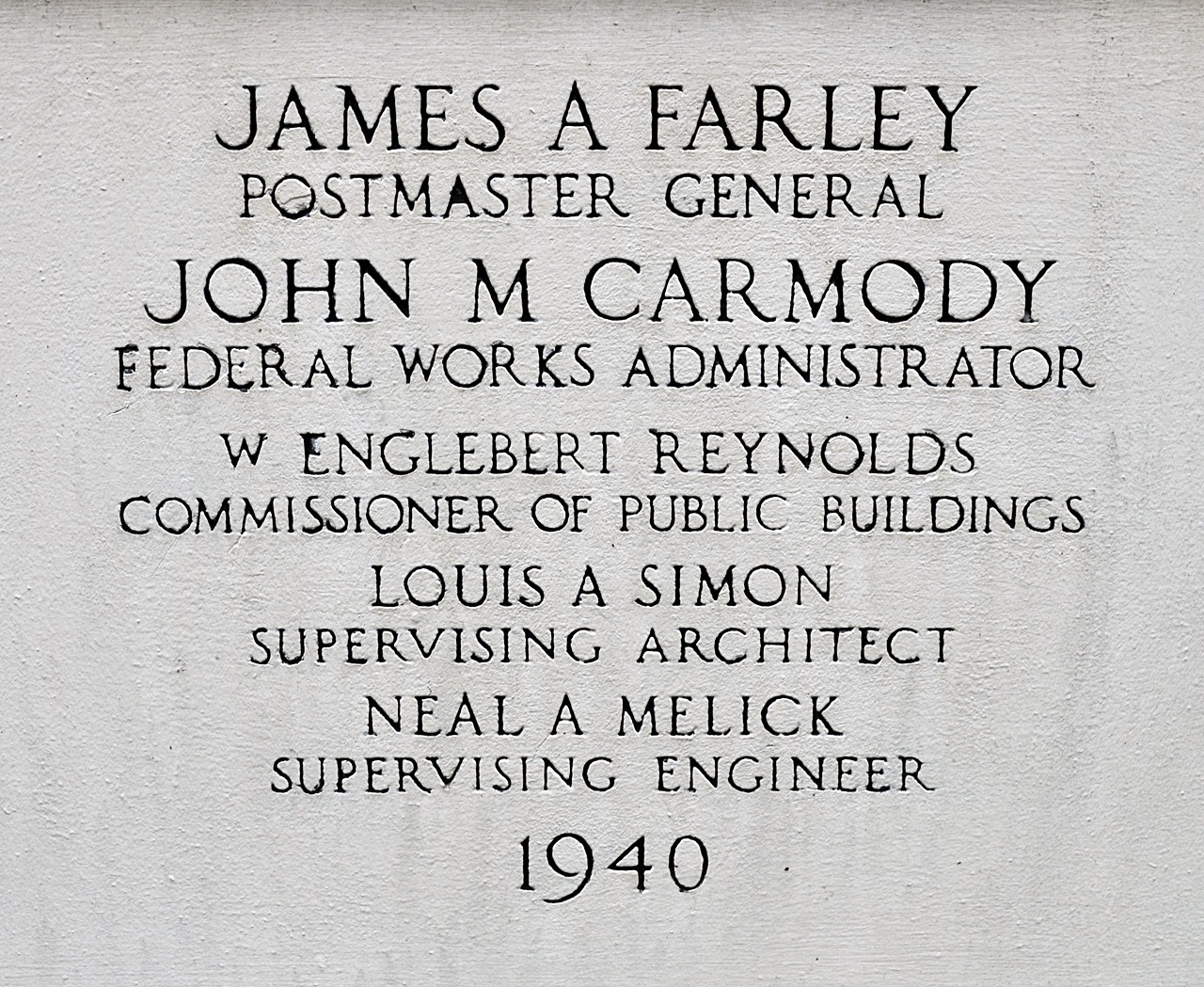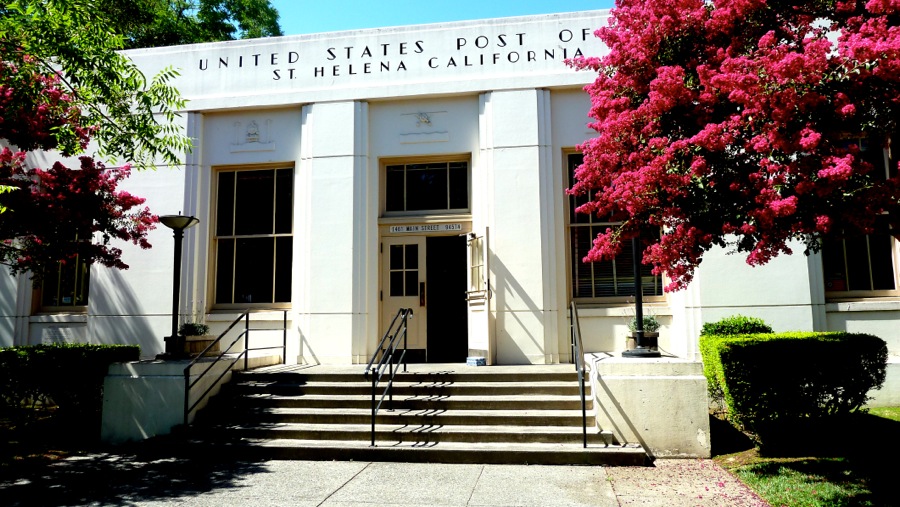
St. Helena’s Post Office at 1461 Main Street opened in 1941. It’s notable for a few reasons—it’s a beautiful building that really is located on the town’s main street. It was designed by architect Lewis Simon in a transitional Art Deco to Moderne style typical of small federal properties of the depression era.
The Post Office was a Works Progress Administration (WPA) project
The WPA was an ambitious employment and infrastructure program created by President Franklin Roosevelt in 1935, during some of the bleakest days of the Great Depression. Over the course of eight years, the WPA put roughly 8.5 million Americans back to work building schools, hospitals, roads, bridges, and other public works and infrastructure projects.
- They built more than 4,000 new school buildings
- Erected 130 new hospitals
- Laid roughly 9,000 miles of storm drains and sewer lines
- Built 29,000 new bridges
- Constructed 150 new airfields
- Paved or repaired 280,000 miles of roads
- Planted 24 million trees to alleviate loss of topsoil during the Dust Bowl.
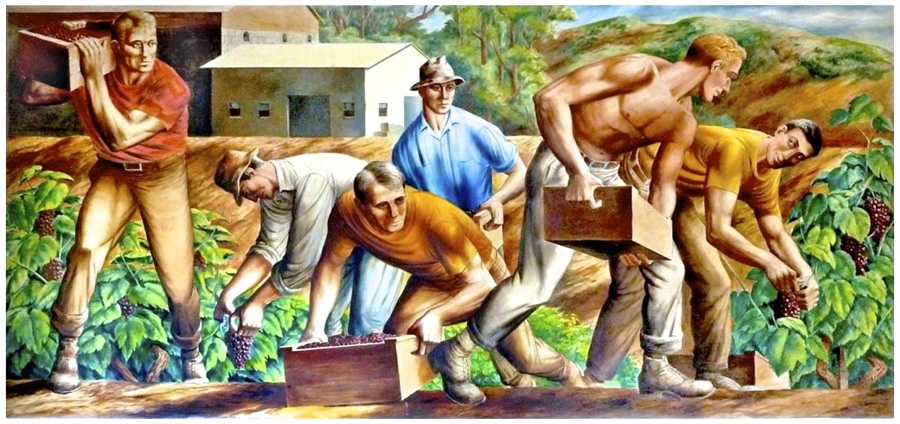
The WPA was created by President Franklin D. Roosevelt with an executive order in 1935
Unemployment was hovering around 20 percent. The WPA was part of Roosevelt’s New Deal—his plan to lift the country out of the Depression by reforming the financial system and restoring the economy to pre-Depression levels.
Federal Project Number One for the arts
WPA also oversaw a group of programs collectively known as Federal Project Number One. These programs employed thousands of artists, musicians, actors and writers. Artists created motivational posters and painted murals of U.S. national parks and “American scenes” in public buildings. Sculptors created monuments, and actors and musicians were paid to perform.
First Lady Eleanor Roosevelt lobbied FDR to sign the executive order establishing Federal One. Federal One also established more than 100 community art centers throughout the country. She later praised the project in columns and speeches and defended it against critics who saw the arts as a waste of money.